Panoramic vs Fisheye Security Cameras: Which Wide-Angle Camera Is Right For You?
Panoramic vs Fisheye Security Cameras: Which Wide-Angle Camera Is Right For You?
Ever wondered if you can use one camera to cover the full width of the yard in front of your house? We get requests like that all the time here at CCTV Camera World. Of course, running two separate wires on each side of your home or business to cover the front from both angles is a hassle and more costly. Plus, you may think it's ugly to have a couple of cameras visible on the front of your home. Well, that's where fisheye and panoramic cameras are useful, so you can get a wide-angle view with just one camera.
With advancements in multi-sensor imaging technology, wide-angle security cameras have become more affordable and widely used than ever. Traditional fisheye cameras relied on a single image sensor paired with an ultra-wide-angle lens, often resulting in noticeable image warping and low clarity. While that technology has improved, panoramic cameras now offer an alternative by combining multiple image sensors into a single, seamless wide-angle view through image stitching.
Both fisheye and panoramic cameras have their unique advantages and limitations, and each excels in different surveillance strategies. In this article, we’ll break down the differences between the two, highlight where each performs best, and help you decide whether a fisheye, panoramic, or even a multi-camera setup is the right choice for your security needs.
Before choosing between a fisheye or panoramic camera, it helps to understand how each type works and what makes them suitable for different video monitoring needs requiring wide viewing angles.
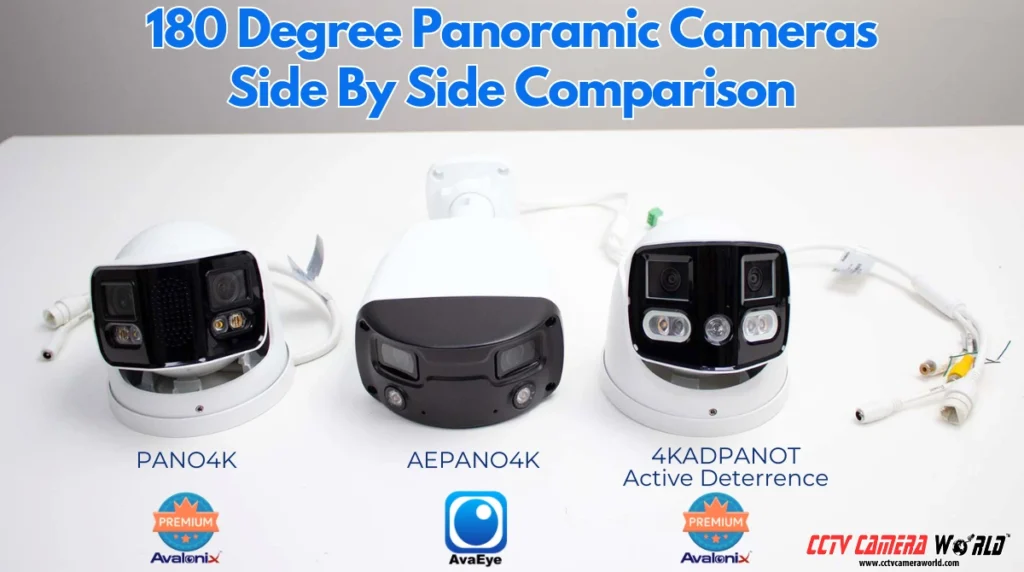
Panoramic security cameras are designed with multiple image sensors, typically two, built into a single larger camera housing. These sensors are aimed 45 degrees in different directions to capture separate video streams that are stitched together into one ultra-wide image. This stitching process creates a seamless panoramic view, often between 150 and 190 degrees, providing more coverage than, say, a traditional fixed-lens 4K PoE camera.
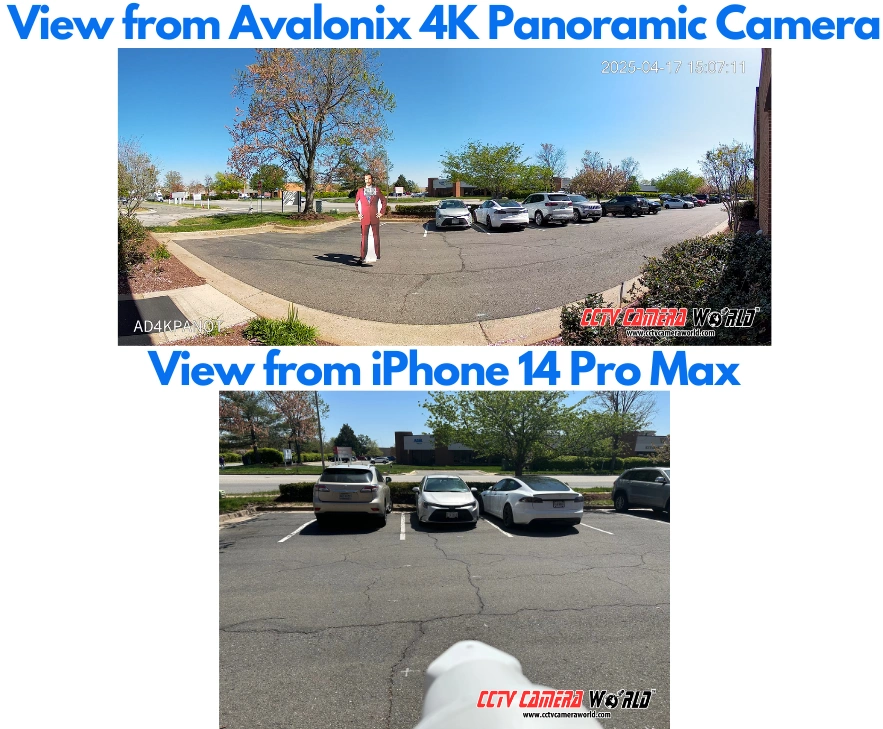
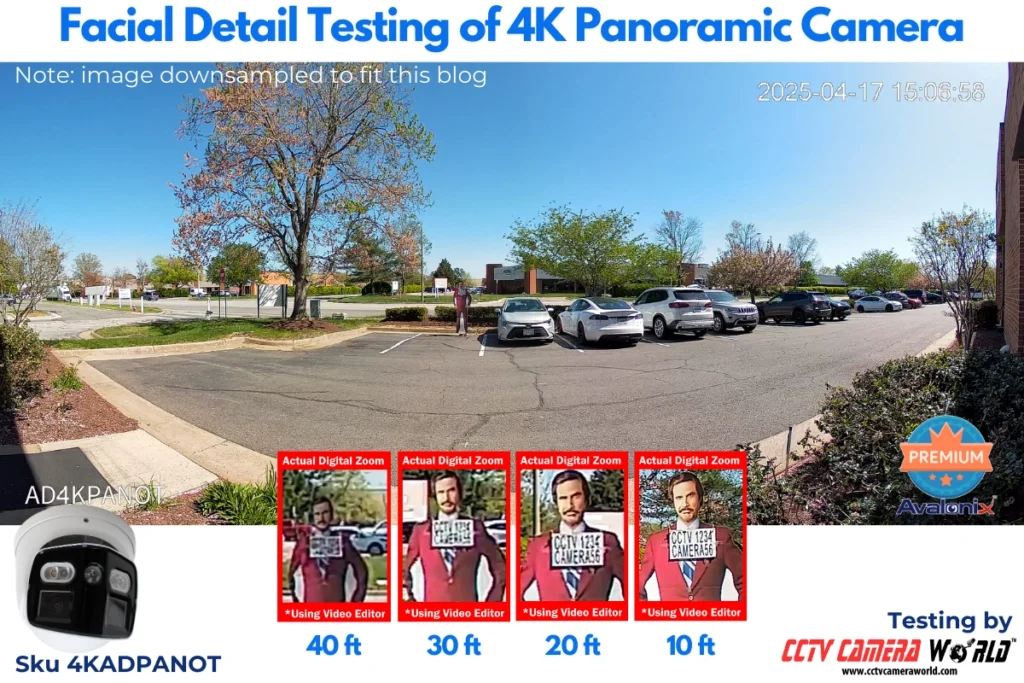
Below is an image comparing the field of view of a panoramic camera with multiple image sensors to that of a picture taken by an iPhone 14 Pro Max in standard wide view which has a 69 degree viewing angle.
Panoramic models are available in turret or bullet-style housings and are ideal for covering wide areas with fewer cams needed. Most panoramic cameras come equipped with white light LEDs for color night vision along with a starlight image sensor so you can see clearly in color at night.
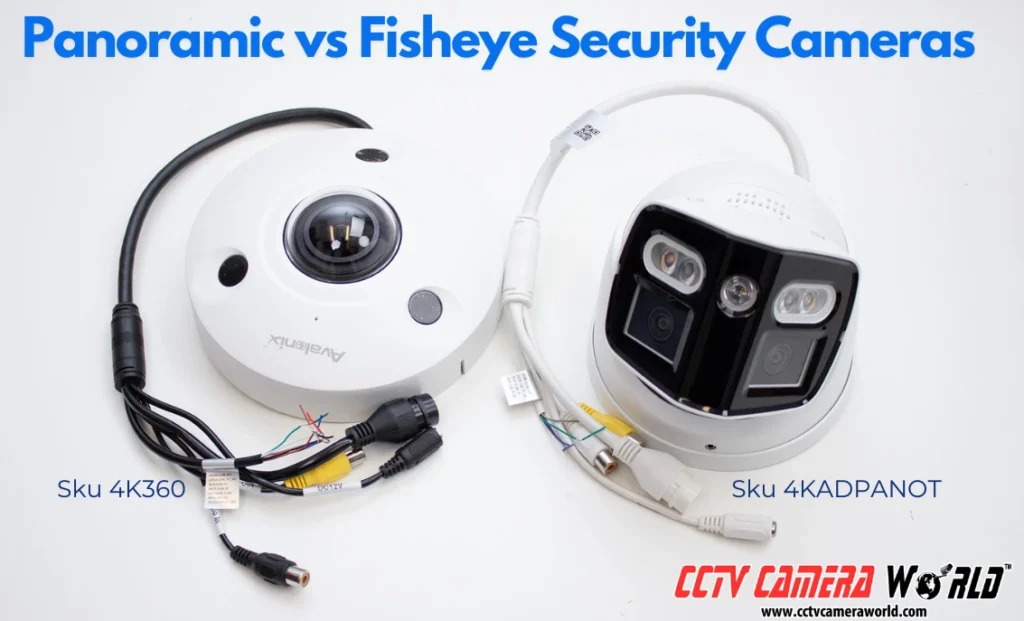
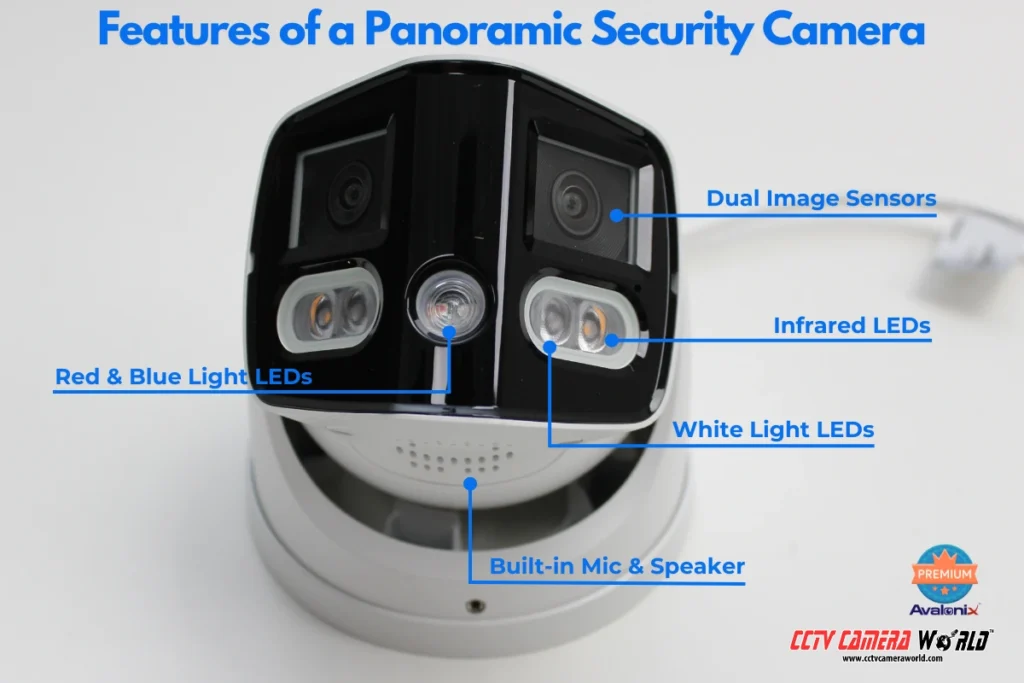
Active deterrence models, such as our 4KADPANOT Panoramic 4K PoE Camera with smart deterrence, include additional illumination options such as IR night vision and red/blue strobing lights. In addition to its wide 180-degree view, the camera intelligently manages its lighting based on the environment. At night, it uses infrared for discreet black-and-white surveillance, switching to its white LEDs when motion is detected nearby. If you have an intelligent function such as smart motion detection configured, the camera activates its red and blue lights and speaker to deter the trespasser.
What is a Fisheye Camera?
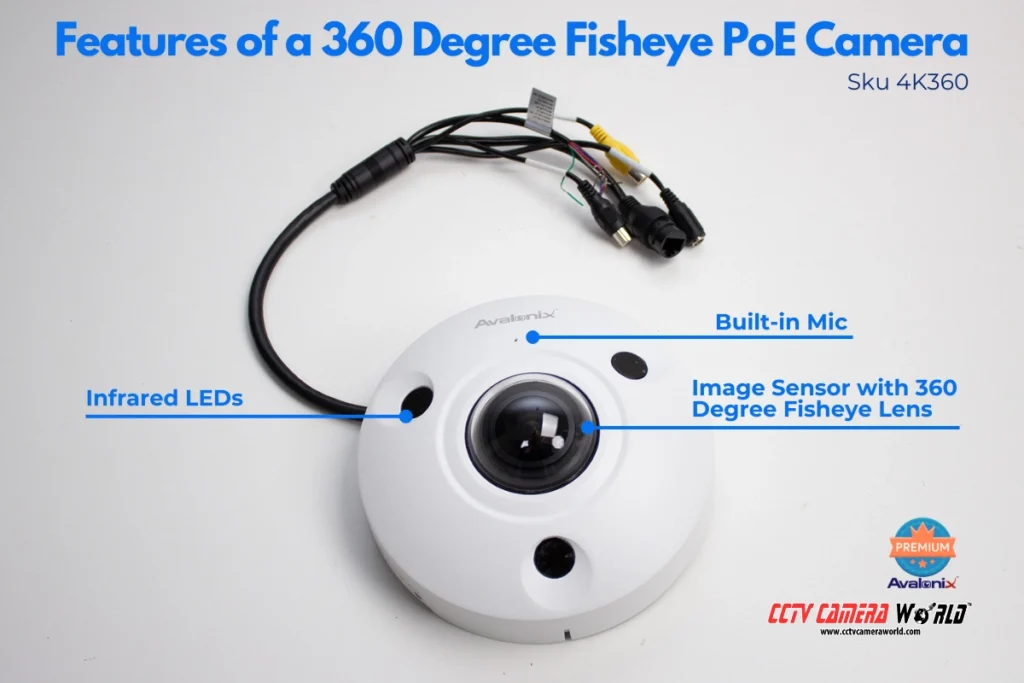
Fisheye security cameras use a single large image sensor paired with an ultra-wide-angle lens that captures either a 180-degree or 360-degree view. The term "fisheye" is a reference to the wide field of vision that fish have, thanks to the placement of their eyes. This is a fitting comparison, as fisheye cameras are designed to give maximum situational awareness from a single vantage point.
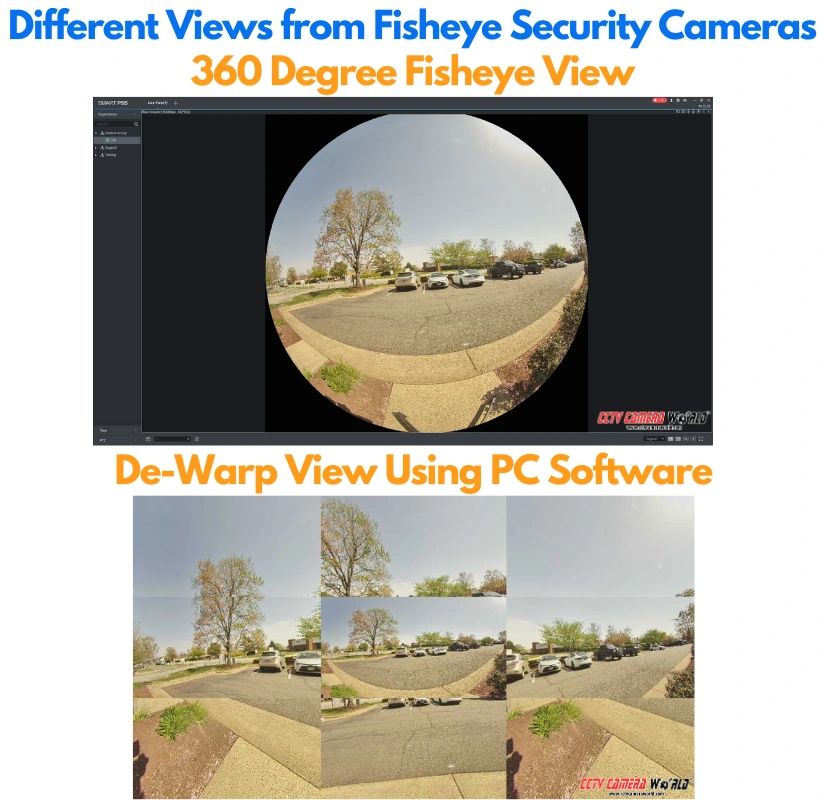
The raw video captured by a fisheye camera appears in a circular format, which is not useful by itself. Specialized software, typically accessed through a computer, web browser, or a compatible NVR, performs a process called dewarping. Dewarping converts the distorted image into flat, usable video that makes sense for surveillance.
While some fisheye models do not include infrared, many offer limited night vision, typically for recording black and white footage up to 30 or 40 feet. If you are looking for a high-performance fisheye camera with night vision, our 4K Fisheye 360 Camera offers crystal-clear video, advanced dewarping features, and a wide field of view that is perfect for monitoring large indoor or outdoor spaces.
Technical Comparison
Now that you know the basics of each camera type, let's explore some key technical differences between panoramic and fisheye cameras.
Camera Type
Field of View
Image Distortion
Image Resolution
Best For
Facial Detail Distance
Panoramic Cameras
Typically 180 degrees
Mild warping near image center
Up to 4K 8MP
Up to 50 feet
No additional software required
Fisheye Cameras
180 or 360 degrees
High distortion (circular image)
Up to 4K 12MP
Up to 35 feet
Requires dewarping via software, web browser, or compatible NVR
Pros and Cons
Super wide-angle cameras offer unique advantages, but each type has trade-offs. Comparing their pros and cons can help you decide which camera fits your surveillance needs best.
Panoramic Camera Pros and Cons
Panoramic cameras are powerful tools for wide-area coverage, but they aren’t always a one-size-fits-all solution for every situation. Here’s what to keep in mind:
Pros
Covers 150 to 190 degrees, ideal for monitoring large areas from the exterior walls of buildings
As shown in the picture above, Panoramic PoE cameras provide up to 40ft of facial during the day
Typically equipped with strong infrared or white-light LED floodlights for night visibility
Most models offer two-way audio with a built-in mic and speaker
Minimal image distortion compared to fisheye lenses
More cost-effective than using several individual PoE cameras
Cons
Large and noticeable design may not suit all locations
Does not eliminate the need for multiple cameras when full 360 degree coverage is required
Fisheye Camera Pros and Cons
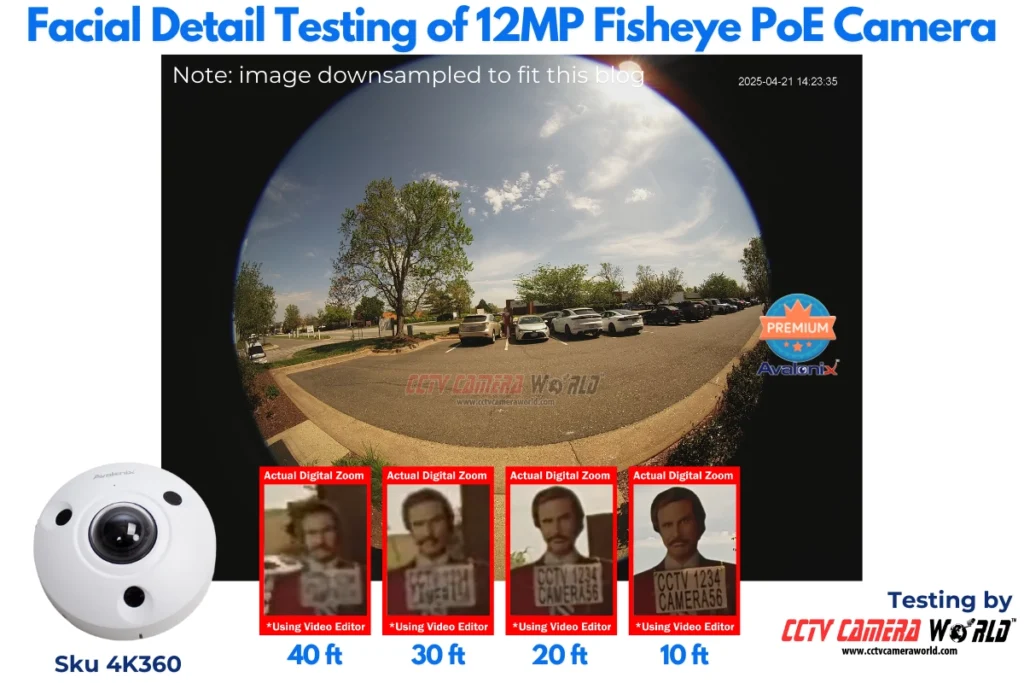
Fisheye cameras are excellent for specialized use, especially indoors. However, they come with limitations. We created the below image from video recorded during our testing of the 4K360 12MP Avalonix Premium Fisheye Camera and found that facial detail is acceptable at 30ft, and best at 20ft.
Pros
Great for general detail of all corners of a room or exterior facing door
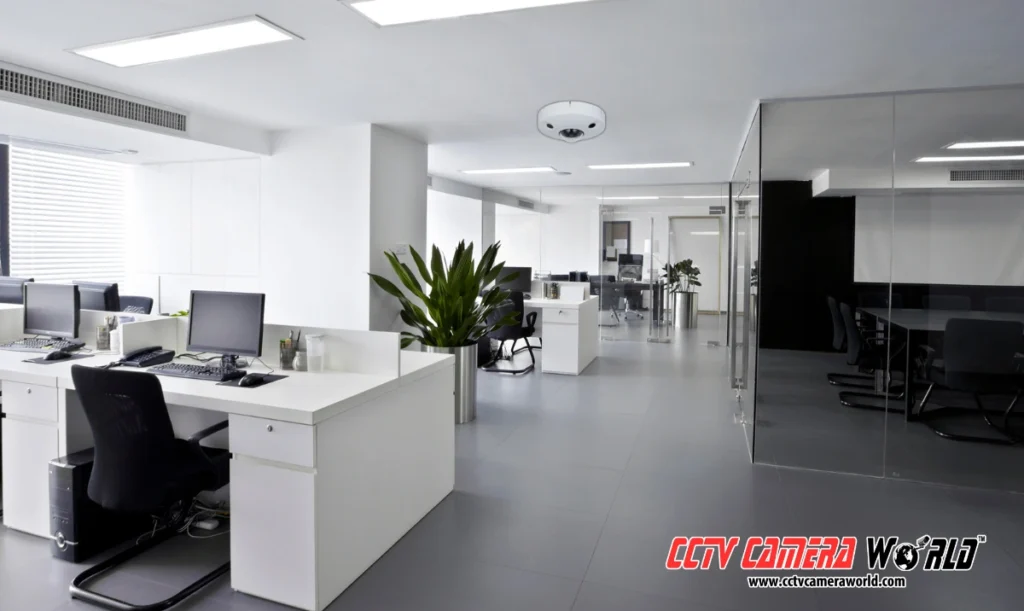
Provides 180- or 360-degree coverage from a single point, perfect for indoor areas like offices and retail stores
Compact, low-profile design for discreet surveillance with built-in mic
Versatile mounting options, including ceilings, walls, or even floors and desktops
Cons
Facial detail limited to 30ft
Not a replacement for multiple IP cameras when detailed coverage or zoom is required
Often limited to 30 feet of infrared or some models may lack IR night vision entirely
Lower image detail at the edges and longer distances compared to traditional cameras or Panoramic cameras
Requires de-warping via web browser, PC software, or a compatible NVR for reviewable video
Ideal Use-Cases for Panoramic and Fisheye Cameras
Choosing between a panoramic or fisheye camera depends heavily on where and how you plan to use it. Below are some of the most common surveillance scenarios where each camera type excels, helping you decide which is the right fit for your security strategy.
Panoramic Cameras — Best Use Cases
Building Perimeters
Perfect for mounting on exterior walls to monitor wide outdoor areas like front yards, parking lots, loading docks, or alleyways.
Wide horizontal coverage (150°–190°) helps to reduce blind spots.
Warehouse Interiors
Ideal for covering long aisles or large open areas in warehouses.
Infrared and floodlight capabilities provide better visibility in low-light environments.
Entrances and Walkways
Useful for tracking foot traffic and monitoring incidents across broad zones.
Active Deterrence features are useful for alerting or warding off intruders.
Public Parks or Recreation Areas
Great for full coverage side view of a basketball court or tennis court.
Mounted on poles or buildings to oversee open-air spaces without a PTZ camera.
Passive full-scene recording without camera movement
Fisheye Cameras — Best Use Cases
Retail Stores and Convenience Shops
Mounted centrally to capture full 360° floor coverage.
Offers overhead general surveillance for loss prevention.
Office Lobbies and Waiting Areas
Ideal for placing in the center of a room or ceiling corner.
Great for monitoring employee attentiveness.
Provides awareness of foot traffic and visitor interactions with one discreet camera.
Elevators and Small Meeting Rooms
Captures everything in tight or confined areas.
Compact size and ultra-wide view make it a natural fit for these locations.
School Classrooms and Libraries
Covers student activity and staff movement with minimal intrusion.
Offers full-area visibility while maintaining a low profile.
Reception Desks or Help Centers
Positioned above desks or kiosks to monitor interactions.
Ideal for liability and safety review.
Frequently Asked Questions about Panoramic and Fisheye Cameras
Do you need an NVR to use a panoramic or fisheye camera?
No, but it is recommended. Panoramic and fisheye cameras can work as standalone devices if accessed through a web browser, PC software, or a mobile app, but using an NVR (Network Video Recorder) offers centralized recording, easier playback, and support for dewarping fisheye video feeds.
Can fisheye and panoramic cameras work with any NVR?
Not always. Some NVRs do not support dewarping or multi-sensor streams. For best results, use a compatible NVR from the same manufacturer that natively supports panoramic stitching and fisheye dewarping.
What are the advantages of using an NVR with fisheye and panoramic PoE cameras?
An NVR provides key features such as
Full-resolution recording without worrying about bandwidth or external storage restrictions
Built-in dewarping and easy virtual PTZ controls
Scheduled recording and motion alerts
Easier remote access and multi-channel support
Can panoramic cameras be linked to PTZ cameras?
Yes. Some surveillance systems use a strategy that has panoramic cameras for providing a wide-area overview, while a nearby PTZ camera is linked for zoomed and detailed recording. Some NVRs allow you to trigger a PTZ preset when motion is detected from the panoramic camera.
Do fisheye cameras record in 360 degrees all the time?
Yes, most fisheye cameras continuously capture the full 180° or 360° field of view. However, you can only view a portion of the video at a time depending on how the video is dewarped during live viewing or playback.
Can fisheye cameras be used outdoors?
Yes, but check for weatherproof (IP66 or higher) and vandal-resistant (IK10) ratings. Outdoor fisheye models exist, but many are optimized for indoor use because of their limited infrared range.
Are panoramic cameras good for license plate capture?
Not really. Panoramic cameras are designed for wide coverage, not zoomed-in detail. For capturing license plates, a dedicated varifocal or LPR (License Plate Recognition) camera is far more effective.
Do fisheye cameras have night vision?
Some do, but their infrared range is usually limited to 30–40 feet. If nighttime recording is critical for your location, check the IR LED specs or consider using several cameras with IR or better low-light image sensors.
Can you zoom in with a panoramic or fisheye camera?
Yes, but only digitally. You can zoom in on dewarped footage, but since it’s a wide-angle lens, the detail is not as sharp as a dedicated zoom lens or optical PTZ camera.
Are fisheye and panoramic cameras NDAA compliant?
That depends on the manufacturer. Many U.S.-based brands offer NDAA-compliant models. Always check the product specifications if you require NDAA compliant security cameras for government or enterprise installations.