
Security Camera System Replacement Options
It's easy to panic when your old security camera system fails. The first assumption is always that everything has to be torn down and started over. That's not always true.
Just because your DVR is dead, your NVR has failed, your phone app was discontinued, or one of your cameras goes bad doesn't mean you have to ditch all of your cameras and wiring. Depending on what you currently have, you may be able to simply swap out the recorder, change a few cameras, or upgrade your system piece by piece.
We're here to help you determine what you have, what can most likely remain, and what needs to be replaced.
Start With What Stopped Working
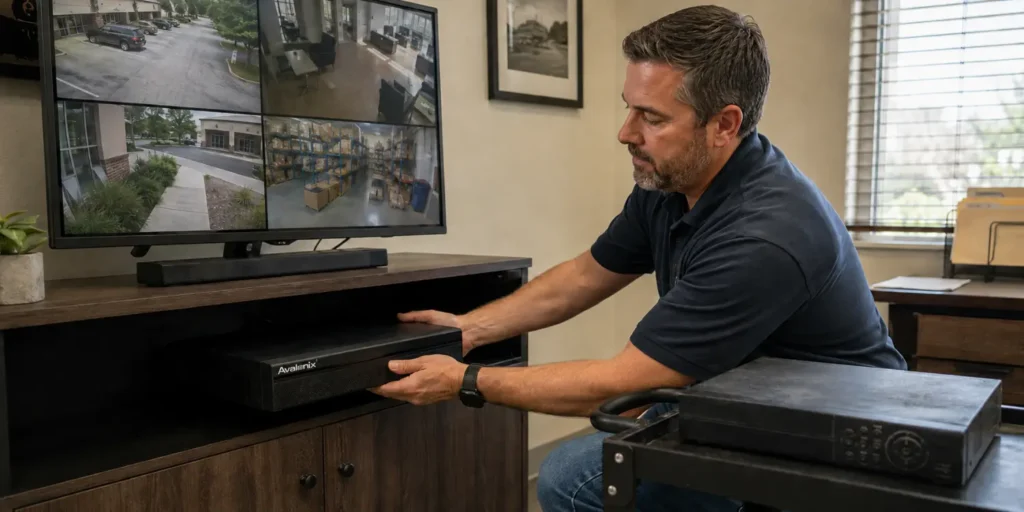
The easiest place to start is with the problem you are having.
- Recorder will not turn on: you may only need a replacement DVR or NVR.
- Phone app no longer works: replacing the recorder may give you access to newer mobile and PC software while keeping compatible cameras.
- One or two cameras are dead: you may be able to replace only those cameras.
- System is too old or low resolution: you can replace the recorder first or upgrade the complete system.
- Manufacturer no longer supports the equipment: moving to equipment based around common camera and cabling standards can make future replacement easier.
If you are not sure which part has failed, do not start unplugging or replacing everything yet. Knowing whether you have a DVR or NVR system makes the next step much easier.
Do You Have a DVR or NVR?
Look at the cables connected to the back of your recorder.
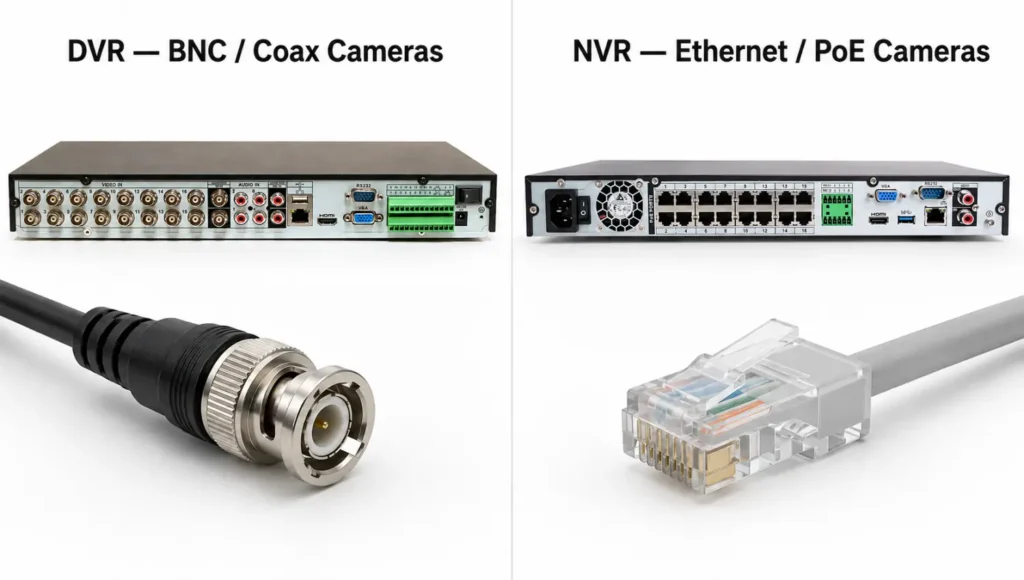
If your cameras connect with round BNC connectors, you most likely have a DVR or another type of coax-based security camera system.
If each camera connects with an RJ45 Ethernet plug that looks like a larger telephone connector, you most likely have an NVR with IP or PoE cameras.
- BNC coax cable: normally used with analog, HD-CVI, HD-TVI, AHD, and similar coax camera systems.
- RJ45 Ethernet cable: normally used with IP and PoE security cameras.
This distinction matters because a DVR and an NVR are not interchangeable. You need a recorder designed to communicate with the type of cameras already installed.
You May Be Able to Keep Your Existing Cameras
One of the nice parts about replacing an older system is that you may be able to keep many of your existing cameras and wiring.
As long as the cameras work and are supported by the new recorder, there is often no need to take them down from the wall simply because your DVR crashed. Likewise for the wiring. Coaxial security camera cable and Ethernet cable are both standards that are still in wide use today. Often times good existing cable can stay in place while you change the equipment on either end of the cable.
You'll still want to make sure everything is compatible. Video formats, resolutions, private network protocols, and Power over Ethernet vs. external power have changed over the years on older systems. We recommend determining what kind of cameras and recorder you currently have prior to buying a replacement.
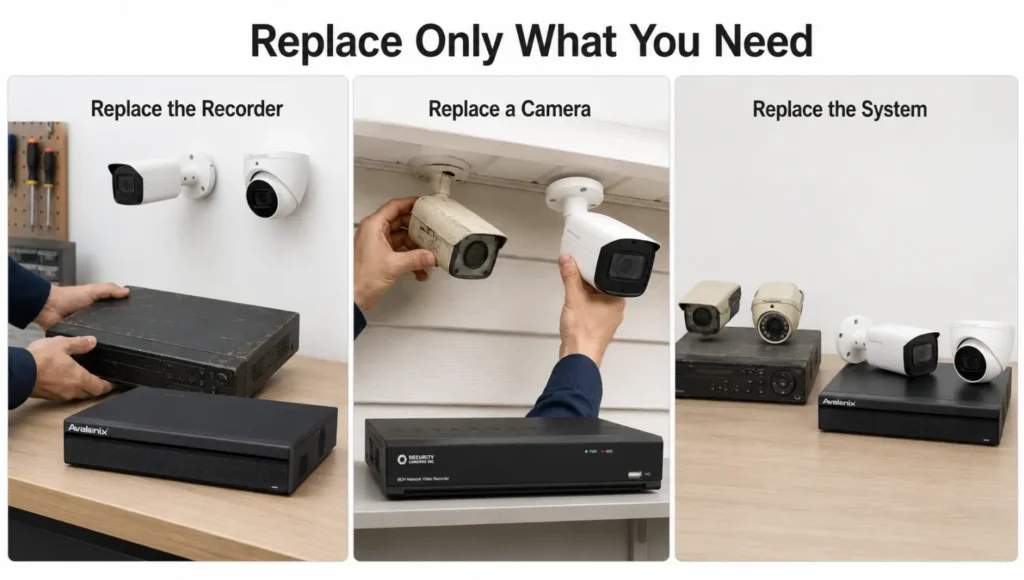
Replace Only the Recorder
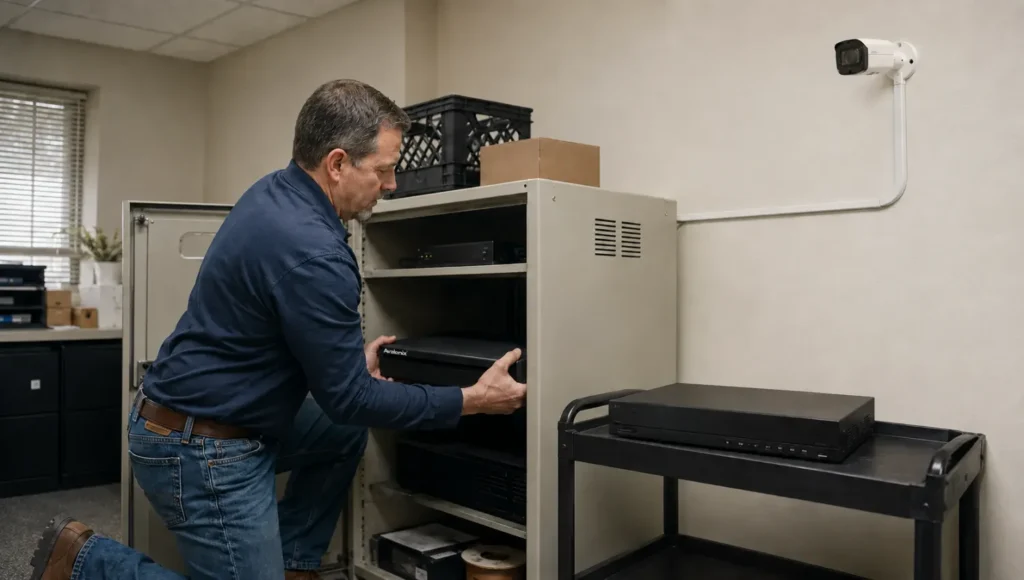
In the event that all of your cameras were functional prior to the recorder failing, the first avenue we typically suggest looking into is simply replacing the DVR or NVR.
With coax cameras, most modern security camera DVRs support a variety of analog and HD-over-coax video formats, allowing you to reuse a lot of your existing BNC cameras while upgrading to a newer recorder with remote viewing software and new features.
With Ethernet cameras, a compatible network video recorder may be able to reuse your existing IP cameras if the proper communication protocols and camera credentials are supported.
Replacing your recorder is also a great time to upgrade to a higher channel count or larger surveillance hard drive if you find you need more space.
Replace Individual Security Cameras
You do not necessarily need a new recorder because one camera went bad.
If the recorder is functioning properly, often times a failed camera can simply be replaced with another camera of the same signal type, resolution, and connection.
We stock replacement HD analog security cameras as well as IP security cameras. From bullet cameras, to turret cameras, dome cameras, and even higher resolution 4K security cameras.
We recommend first checking your recorder model and what type of cable is running to the camera before buying a new camera. Often times that will tell us more than the shape of the camera.
Replacing Your Entire Security Camera System
In some situations, starting from scratch is a better option.
Whether your current gear is extremely dated, multiple cameras need replacing, you're not happy with picture quality, or you want features your current system can't provide, upgrading to a new security camera system may be a better investment of your time and money.
That doesn't necessarily require ripping out wires.
If you already have functional coax cable, you can consider a new HD analog security camera system. Having Ethernet cabling in place already opens up the option of using a PoE security camera system and reusing those wires.
New systems can offer better resolution, more storage space, improved remote viewing options, and features like person and vehicle detection if supported by both the recorder and cameras.
Replacement Guides by Brand
Some brands need a little more explanation because they have sold a lot of different DVRs, NVRs, and cameras over the years. If you already know what brand you have, start with one of the guides below.
Replacing a Lorex Security Camera System
Over the years Lorex has sold numerous DVRs, NVRs, analog cameras, and IP cameras. That being said, there is no single replacement recorder that will work with all Lorex setups.
The good news is that many Lorex systems use video formats and camera connections that allow you to find newer equipment that can work with your current wiring and cameras. Many times you can reuse cameras and/or wiring when upgrading from an older Lorex system.
You can find more information on replacing Lorex recorders, replacing Lorex cameras, and complete system upgrades on our dedicated Lorex replacement page.
View Lorex Security Camera System Replacement Options
Replacing a Q-See Security Camera System
Q-See equipment creates a different problem for many owners because the company stopped supporting a large amount of its older equipment. There are still plenty of Q-See cameras and cables installed in homes and businesses, though, and some of that equipment can continue to be useful.
As with Lorex, the first step is identifying whether the existing system uses coax cameras or IP cameras and determining what signal or communication method the cameras require.
We have replacement options for Q-See DVRs, NVRs, cameras, and complete systems.
View Q-See Security Camera System Replacement Options
Replacing a Dahua Security Camera System
Dahua systems are often good candidates for partial replacement because many installations use HDCVI coax cameras or Dahua IP cameras that can continue working with compatible replacement equipment.
Depending on the Dahua equipment you have, you may be able to replace only the DVR or NVR while keeping compatible cameras and wiring. Compatible systems may also retain features such as audio, PTZ controls, Smart Motion Detection, Tripwire, and Intrusion rules.
Our dedicated Dahua replacement guide explains what to look for when replacing a Dahua DVR, NVR, IP camera, HDCVI camera, or complete security camera system.
View Dahua Security Camera System Replacement Options
Replacing a CCTV Security Pros System
CCTV Security Pros replacement options depend on the product line you own. Blue Line coax and IP equipment use compatible Avalonix Premium Series replacements, while Black Line and SureVision IP equipment use compatible AvaEye cameras and NVRs.
CCTV Camera World's technical staff has tested replacement combinations for these product lines. Our guide explains which cameras and recorders can work together, what features may remain available, and how to identify your equipment before ordering.
View CCTV Security Pros Replacement Cameras, DVRs & NVRs
Can You Reuse Security Camera Wiring?
Usually, yes, as long as the cable is in good condition and is appropriate for the equipment you plan to use.
Older analog systems generally use coaxial security camera cable with BNC connectors. IP and PoE systems normally use Ethernet network cable with RJ45 connectors.
The condition and construction of the cable still matter. Long cable runs, copper-clad aluminum cable, damaged connectors, corrosion, and old power wiring can all create problems even when the cable looks usable from the outside.
If the system worked correctly before the recorder failed, that is generally a good sign that the installed cable is worth evaluating before replacing it.
Upgrading While You Replace Old Equipment
A replacement does not have to be an exact copy of what you had before.
If you were using an 8-channel recorder with six cameras, for example, you could replace it with a larger recorder and leave yourself room for future cameras.
You can also use a replacement as an opportunity to improve:
- Video resolution
- Nighttime image quality
- Recording storage
- Remote viewing
- Person and vehicle detection
- Camera count
- Overall system reliability
Some upgrades require newer cameras, while others can be gained simply by replacing the recorder. It depends on the equipment already installed.
Not Sure What You Have?
You are not the only one. A lot of people know the brand of security camera system they have but have no idea what type of cameras or recorder they actually own.
The recorder model number is usually the most useful place to start. Look for a label on the bottom, back, or underside of the DVR or NVR.
You can also take a clear picture of:
- The front of the recorder
- The model-number label
- The connections on the back
- One of the existing cameras
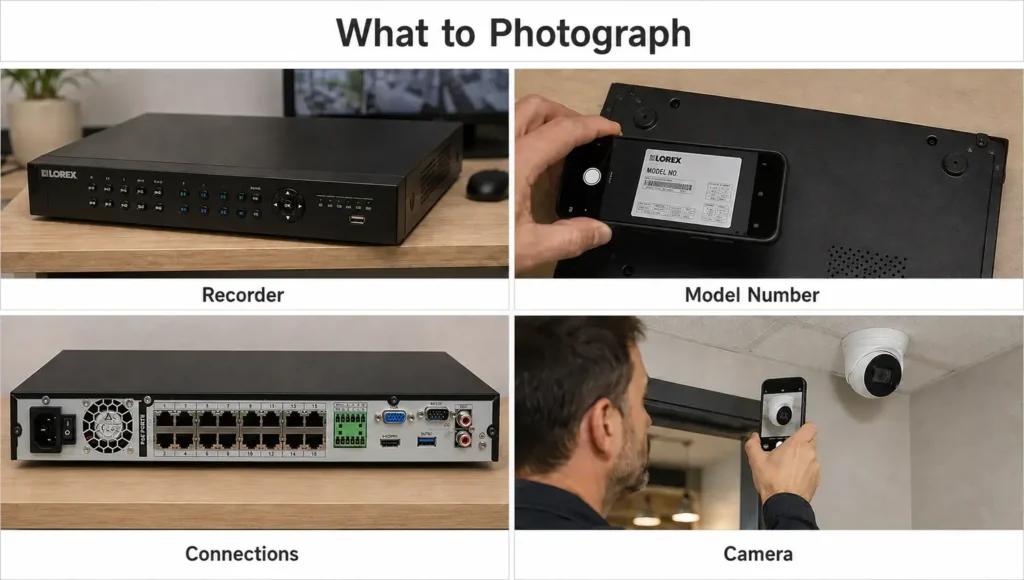
Then send us a contact request or call us at (716) 229-0080 during business hours. We can help you figure out what you have and whether any of it can be reused.

Shop Replacement Equipment
- Security Camera Recorders
- Security Camera DVRs
- NVR Recorders
- Security Cameras
- Complete Security Camera Systems
Frequently Asked Questions About Replacing a Security Camera System
Do I need to replace all of my cameras if the DVR fails?
No. If the cameras are functional, and a replacement DVR supports the cameras' signal type and resolution level, the cameras can often be reused when replacing only the recorder.
Can I reuse my existing cameras with a new NVR?
In some cases. IP camera compatibility with a new NVR will vary based on camera model, network protocol used, authentication credentials, firmware, and features supported by the new NVR. Check compatibility before buying.
Can I reuse my old security camera wire?
Yes, in many cases. Existing coax or Ethernet cable can often be reused if it is undamaged and compatible with the new equipment.
How can I tell if I have a DVR or NVR?
Look at the type of connectors on the camera ports. Round BNC connectors are normally used with coax cameras and a DVR. RJ45 Ethernet connectors are normally used with an NVR and IP cameras.
Should I replace my whole system or just the recorder?
That depends on what broke, and what you are hoping to improve. If you're still happy with the picture from your cameras, replacement of only the recorder may be your best choice. However, if multiple parts of your system are failing, or you wish to significantly upgrade the resolution or features of your system, you may want to replace everything.
Can I replace an old security camera system with another brand?
Often you can, but compatibility has to be checked. Coax systems depend heavily on the camera signal format and resolution. IP systems also depend on software and network protocol compatibility.